Canadian Government Signals Pivot Toward Microreactors in New Nuclear Energy Strategy
April 29th, 2026
The Government of Canada has unveiled early details of a forthcoming Nuclear Energy Strategy, signaling a renewed federal push to expand the domestic electrical grid, strengthen energy sovereignty, and position Canada as a global nuclear supplier. While the final policy framework is expected in late 2026, announcements made this week point to a growing emphasis on remote-deployable nuclear technologies, particularly microreactors.
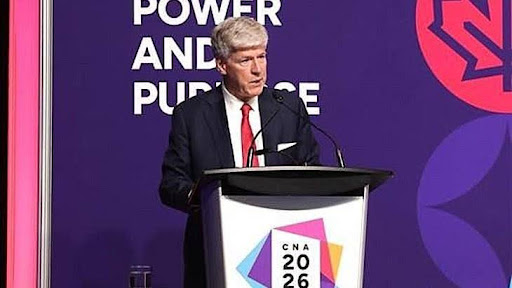
The strategy was introduced at the Canadian Nuclear Association Conference by Minister of Energy and Natural Resources Tim Hodgson, who described nuclear energy as central to Canada's long-term economic security, clean energy transition, and global competitiveness.
Four Pillars to Guide Canada's Nuclear Expansion
According to Natural Resources Canada (NRCan), the new strategy will be structured around four core pillars: enabling new reactor builds across the country; positioning Canada as a global supplier and exporter of nuclear technology; expanding uranium production and fuel opportunities; and accelerating innovation in both fission and fusion technologies.
The framework builds on decades of Canadian nuclear leadership, including CANDU™ reactor technology, abundant uranium resources, a highly skilled workforce, and a world-leading nuclear safety regime. Federal officials emphasized that the strategy is intended not only to expand clean electricity supply but also to grow domestic industry, create jobs, diversify trade, and enhance energy affordability and security at home.
To support the research and infrastructure underpinning these ambitions, the government reaffirmed a $2.2 billion, 10-year capital investment at Chalk River Laboratories, Canada's national nuclear laboratory. The funding includes new facilities such as the Advanced Materials Research Centre and is intended to modernize research capacity supporting reactor development, nuclear fuels, safety and security, and life-extension programs for existing reactors.
Defence Investment Highlights Arctic Energy Needs
A central feature of the announcement was a $40-million investment for 2026–27 by the Department of National Defence (DND) to launch a feasibility study examining the use of Canadian-controlled microreactors to provide heat and electricity to remote Canadian Armed Forces (CAF) facilities in the Arctic and northern Canada.
Minister of National Defence David J. McGuinty framed the initiative as a matter of sovereignty and operational resilience, calling it "an important step in supporting Canadian-controlled nuclear energy technology and enabling a sustained defence presence in the Arctic and the North."
The study reflects growing concern over the limitations of diesel-based energy systems in remote regions, where fuel transport is costly, emissions-intensive, and vulnerable to supply disruptions. Early federal funding for the microreactor feasibility program has already included $6 million in 2025–26, with much of that investment directed toward research and development at Chalk River.
Industry Readiness Grows as Deployment Challenges Remain
DND's interest in off-grid nuclear power also provides broader context for recent federal investments aimed at preparing Canada's industrial base. In April, Toronto-based Canadian Strategic Missions Corporation (CSMC) secured a $1.2-million federal grant through NGen Canada's Advanced Manufacturing Technology Program, part of a $3-million project to develop an in-factory manufacturing cell for its LEUNR (Low Enriched Uranium Nuclear Reactor) microreactors, based on legacy Canadian Nuclear Laboratories technology.
Such investments are intended to accelerate the transition from prototype systems to scalable manufacturing. However, experts caution that deploying microreactors in the Canadian Arctic remains a complex, long-term endeavor. Any northern deployment will face rigorous regulatory scrutiny from the Canadian Nuclear Safety Commission, along with logistical hurdles, environmental assessments, and consultations with Northern and Indigenous communities.
From Terrestrial Energy Security to Space Applications
While terrestrial deployment will take time, the renewed push to industrialize microreactor manufacturing has implications beyond Earth. Canadian companies are increasingly pursuing dual-use strategies, using domestic energy and defence projects to mature technologies with future space applications.
As international space agencies look to nuclear fission to power lunar surface operations and endure the Moon's two-week-long nights, building a robust commercial manufacturing base in Canada today could enable domestic industry to support future off-world power systems.
For now, the government's message is clear: nuclear energy—and particularly advanced, deployable reactors—will play a growing role in Canada's energy, defence, and industrial strategy. As Minister Hodgson noted, maintaining leadership will require moving "urgently and strategically," turning long-standing innovation into deployable solutions for a rapidly changing world.