CSMC CEO Daniel Sax highlights “LunaPure” system and dual-use nuclear ambitions on CTV news
May 1st, 2026
Canadian Strategic Mission Corporation (CSMC) CEO and founder, Daniel Sax, appeared on CTV Your Morning to discuss a breakthrough technology aimed at solving one of the biggest challenges in deep-space exploration: access to clean water. During the interview, Sax outlined how the company's "LunaPure" system could enable astronauts to extract and purify water directly from the Moon's surface.
The TV feature marks a significant milestone for the Canadian firm, bringing its technology and broader vision for space and energy infrastructure into the public spotlight.
As NASA accelerates plans to establish a sustained human presence on the Moon, CSMC has emerged as a key player following its recent win in the Aqualunar Challenge led by the Canadian Space Agency. The company secured $400,000 in funding to advance its "LunaPure" system, an innovative technology designed to extract and purify water from ice deposits on the Moon.
Turning Lunar Ice Into Drinkable Water
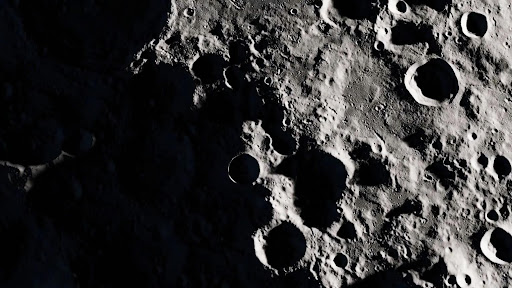
At the core of LunaPure is a low-maintenance system engineered specifically for the harsh realities of the lunar environment. The technology targets ice locked within permanently shadowed craters, regions that never receive sunlight and are among the coldest places in the solar system.
According to CSMC CEO Daniel Sax, the process is designed to both extract and purify water simultaneously.
"Our technology takes that frozen water from permanently shut out craters and melts it using solar energy," Sax explained in the interview. "At the same time, it removes razor sharp lunar dust and other contaminants you wouldn't want to consume."
Scientists estimate that the Moon contains approximately 600 billion kilograms of frozen water, formed through a combination of solar wind interactions and impacts from water-bearing meteorites. Over billions of years, this water accumulated in "cold traps," where extreme temperatures prevent it from evaporating.
By leveraging solar energy and the vacuum conditions of space, LunaPure minimizes mechanical complexity, an essential feature for long-duration missions where maintenance opportunities are limited.
Supporting NASA's Artemis Moon Missions
The timing of LunaPure's development aligns closely with NASA's Artemis program, which aims to return humans to the Moon and establish a permanent base for scientific exploration.
Future Artemis missions are expected to rely heavily on in-situ resource utilization (ISRU): the ability to use materials found on the Moon rather than transporting them from Earth. Water is central to this strategy, supporting drinking supplies, oxygen production, and even rocket fuel generation.
CSMC is working to advance LunaPure with the goal of integrating it into upcoming lunar missions, potentially contributing to the infrastructure needed for sustained human activity on the Moon.
Dual-Use Innovation: From the Moon to the Arctic
While the company's lunar ambitions are drawing attention, its broader strategy extends back to Earth.
CSMC is simultaneously developing micro-scale nuclear reactor technology designed to power both lunar bases and remote terrestrial regions. The approach reflects a growing trend toward dual-use innovation where technologies developed for space applications also address critical infrastructure challenges on Earth.
Remote regions in Canada's Arctic face ongoing energy constraints, relying heavily on diesel fuel that is costly, emissions-intensive, and difficult to transport. Nuclear microreactors are increasingly being explored as a long-term alternative.
Recent federal signals, including announcements from Natural Resources Canada and comments from Minister Tim Hodgson, indicate that deployable nuclear energy systems will play a larger role in Canada's future energy strategy.
For CSMC, this creates a convergence of opportunity. The same challenges we face on the Moon—extreme cold, isolation, and limited logistics—exist in the Arctic; Solving for one helps solve for the other.
Building Infrastructure for the Next Frontier
As governments and space agencies invest in long-term infrastructure beyond Earth, companies like CSMC are focusing on technologies that can operate reliably in extreme environments with minimal human intervention.
The company is advancing its water purification and energy systems in parallel, with the goal of deploying both within the next decade. On Earth, this could mean supporting energy sovereignty in northern communities and defence installations. In space, it could enable sustained human presence on the Moon.
The broader implication is clear: the technologies required to live and work in space may increasingly shape how infrastructure is built in the most challenging environments on Earth.
For now, CSMC's LunaPure system represents a step toward solving one of space exploration's most fundamental problems, ensuring that wherever humans go next, they can access one of life's most essential resources.